

By Samuel Hobson, BSc, MCSP — Physiotherapist at TMC
Why Tendon Pain Appears Around Menopause
Many women notice new or stubborn tendon pains around midlife: sore shoulders, aching elbows, or that sharp pain around the hip or heel that just won’t settle.
These aren’t coincidences. During menopause, hormonal changes make tendons more vulnerable to overload and slower to recover.
The Role of Oestrogen in Tendon Health
Oestrogen plays a vital role in keeping tendons strong, flexible, and well-nourished.
It supports collagen production — the protein that gives tendons structure — and helps maintain healthy blood flow and hydration within tendon tissue.
When oestrogen levels drop during the menopause transition:
-
Collagen quality and elasticity decline
-
Tendons become less able to tolerate load
-
Micro-tears heal more slowly
-
Pain, stiffness, and fatigue become more persistent
This doesn’t mean the tendon is “injured” in the classic sense — it’s more about reduced tissue capacity meeting everyday strain. Over time, this imbalance can lead to tendinopathy.
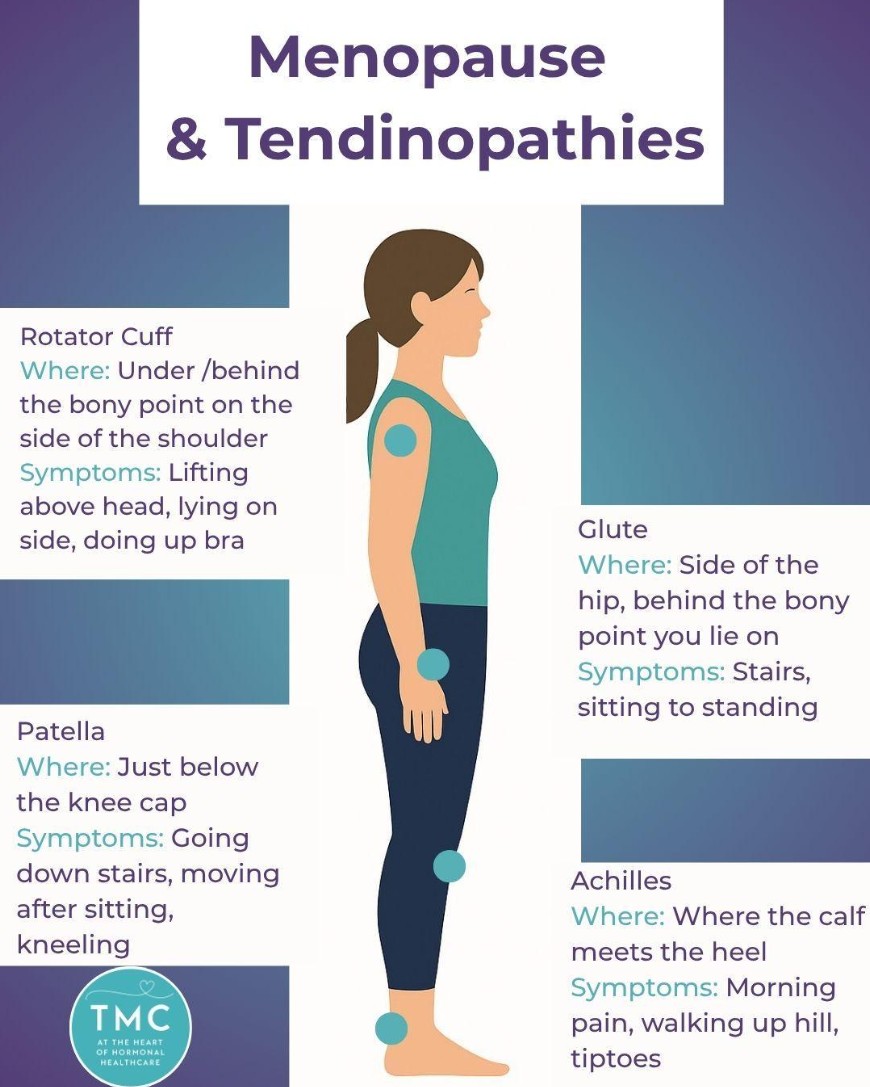
Common Sites of Tendinopathy in Menopausal Women
Women in their 40s to 60s often experience pain in areas that rely heavily on tendon strength for daily movement.
More on bone health, from our specialists
One email a month: new articles written by the clinicians you’d see. No spam, unsubscribe anytime.
Recovery Takes Time — but Early Action Helps
Tendinopathy recovery is slow but achievable.
Research suggests it can take six to nine months for tendons to remodel and strengthen.
That’s why resting for a few weeks rarely works; it often leads to more deconditioning and loss of confidence to move — during a life stage where staying active is vital.
By the time many women reach physiotherapy through NHS referral pathways, they may already have:
-
Reduced exercise tolerance
-
Loss of muscle and bone strength
-
Decline in balance and coordination
-
Widespread pain from inactivity
Early physiotherapy assessment allows for graded loading programmes to begin before secondary weakness or long-term pain patterns set in.
What Physiotherapy Can Offer
Physiotherapy helps women understand and rebuild their tendon capacity safely and effectively through menopause.
A physiotherapist can:
-
Identify which tendon is affected and rule out other causes
-
Provide a graded, evidence-based loading plan to restore function and strength
-
Address contributing factors such as hormonal changes, muscle imbalance, or training modifications
-
Teach pacing and activity moderation to keep you moving while recovering
-
Guide a safe return to exercise to maintain bone, muscle, and joint health through menopause
Early physiotherapy input reduces recovery time, avoids unnecessary imaging or medication, and restores confidence to stay active.
Keep Moving — and Keep Your Momentum
Menopause brings hormonal changes that can make tendons more sensitive, but that doesn’t mean you have to stop moving.
With the right assessment and a structured exercise plan, tendons can adapt, strengthen, and support you through this life stage.
Don’t wait for it to get better on its own — get assessed, get moving, and keep your momentum.