






By Dr Joanne Hobson, Chief Executive Officer, TMC Health
-
What do we mean by “progesterone intolerance”?
Many women start menopause hormone therapy (MHT) expecting relief – then feel unexpectedly worse when the progesterone (or synthetic progestogen) is added.
You might notice:
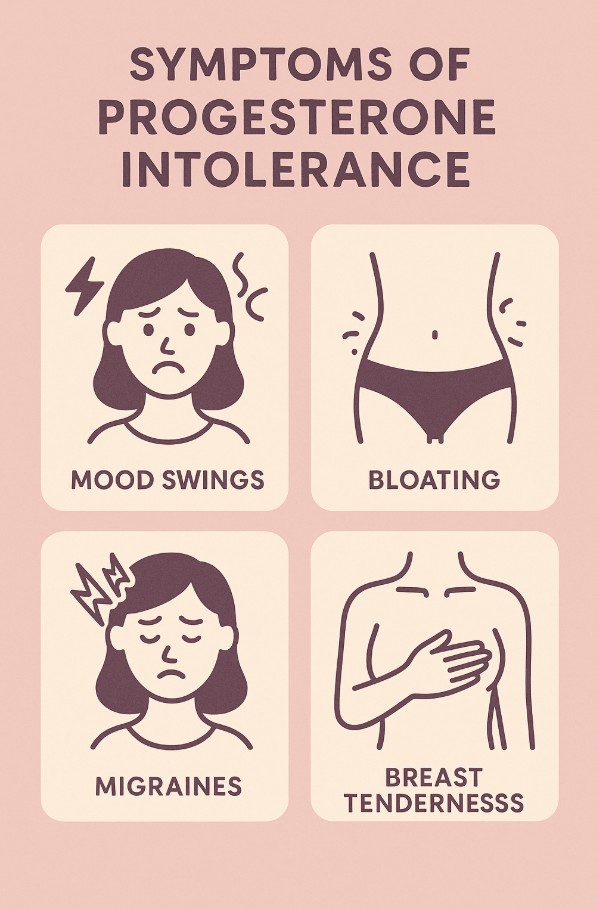
- Sudden low mood, anxiety or “rage”
- Worsening migraines or headaches
- Bloating, breast tenderness, fluid retention
- Acne or oily skin
- Fatigue, brain-fog or feeling “drugged”
- Return of PMS-type symptoms on a continuous MHT regime
If these symptoms reliably appear when you take progesterone or progestogen, and ease when it’s stopped, we often describe this as progesterone (or progestogen) intolerance.
The British Menopause Society (BMS) highlights that progestogen intolerance is one of the main reasons women stop HRT altogether, even though MHT remains the most effective treatment for menopausal symptoms. (British Menopause Society)
Professor Nick Panay, a leading menopause specialist, has described progestogen intolerance as “a key factor limiting compliance with hormone therapy,” because women may feel that “the progesterone part of HRT makes them feel like a different person.” (PubMed)
-
Why do we need progesterone with MHT?
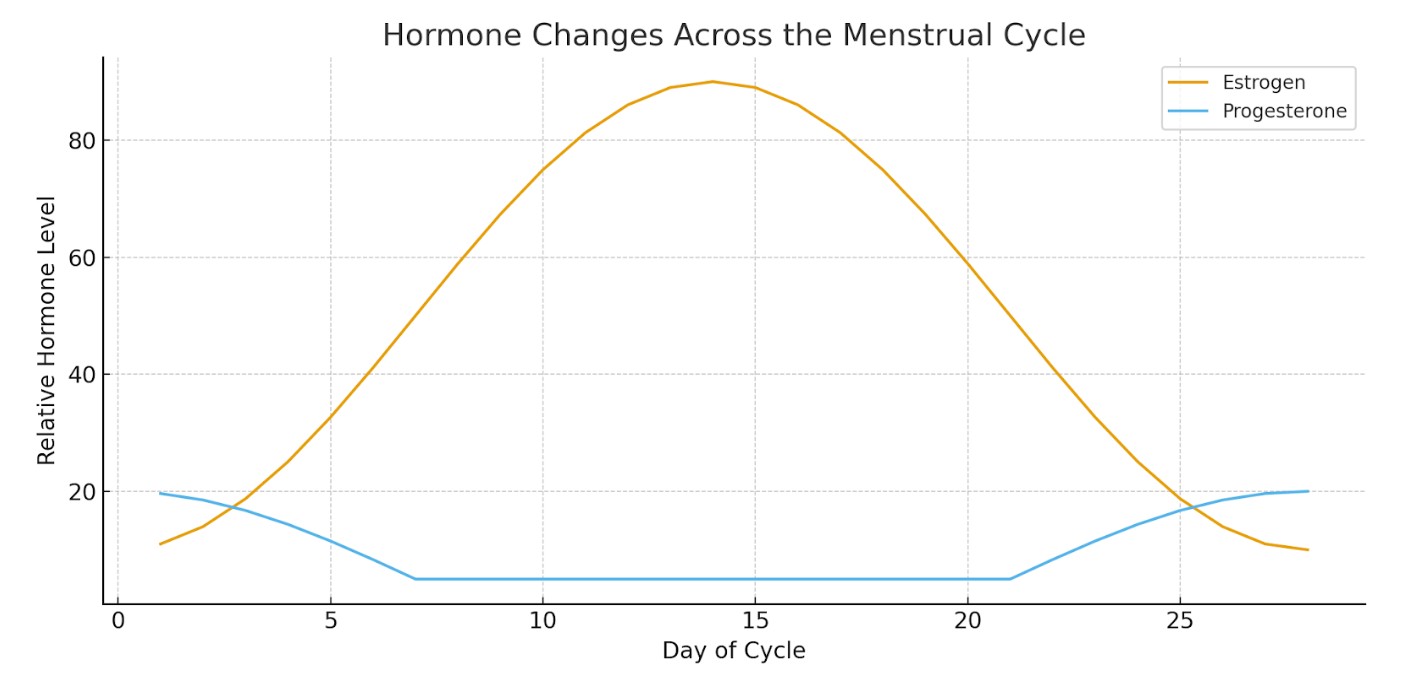
If you still have a uterus and are using systemic oestrogen (patch, gel, spray or tablet), you must have endometrial protection. Oestrogen alone thickens the lining of the womb (endometrium), increasing the risk of endometrial hyperplasia and cancer over time.
Progesterone or a synthetic progestogen:
- Switches the endometrium from proliferation into a secretory, “resting” phase
- Prevents over-thickening (hyperplasia) and reduces cancer risk
A 2023 BMS technical update confirms that oral micronised progesterone at 200 mg for 12–14 days per month provides effective endometrial protection with standard-dose oestrogen for up to five years. (British Menopause Society)
Key point: If you have a womb, you cannot safely stay on systemic oestrogen without adequate progesterone/progestogen, unless you have had surgery or specific specialist treatments that remove or ablate the endometrium.
-
How common is progesterone intolerance?
We don’t have perfect numbers, but:
- Clinical experience and observational data suggest a substantial minority of women on combined MHT experience troublesome progestogen-related side effects. (British Menopause Society)
- In everyday clinics, we see patterns that mirror severe PMS or premenstrual dysphoric disorder (PMDD) now sometimes described as pre-menstrual exacerbation (PME) in perimenopause. (JAMA Network)
-
What causes progesterone intolerance?
We don’t fully understand why some people react so strongly, but research suggests:
- Brain sensitivity to progesterone and its metabolites
Progesterone is metabolised in the brain to allopregnanolone, which acts on GABA-A receptors. In sensitive individuals, this can provoke anxiety, irritability, sedation or mood swings rather than the gentle calming effect seen in others. (JAMA Network) - Differences between synthetic progestogens and body-identical progesterone
- Synthetic progestogens (e.g. norethisterone, medroxyprogesterone acetate) may interact with androgen, glucocorticoid or mineralocorticoid receptors, causing fluid retention, breast tenderness or mood changes. (British Menopause Society)
- Micronised progesterone (body-identical) is biochemically identical to ovarian progesterone and often better tolerated, especially when taken at night. (British Menopause Society)
- Baseline mood vulnerability
Perimenopausal women have a higher risk of depression and mood disorders, especially when hormone levels are fluctuating. Progesterone can amplify this in susceptible brains. (JAMA Network) - Dose and route of administration
Higher doses, oral tablets and continuous regimes may cause more systemic side-effects than lower doses, vaginal routes, or intrauterine systems (e.g. Mirena). (British Menopause Society)
-
Symptoms checklist: could it be progesterone intolerance?
Women often say “I just know it’s the progesterone.” Patterns to look for:
- You feel significantly worse in the second half of a sequential HRT cycle (the “progestogen” days).
- On continuous combined MHT, you feel permanently pre-menstrual.
- Your symptoms settled when you started oestrogen alone (e.g. early titration) but returned or worsened when progesterone/progestogen was added.
- You previously struggled with hormonal contraception containing progestogens (e.g. mini pill, some coils, implants).
Important safety note
Never stop your progesterone part of MHT long-term without medical supervision if you still have a womb. Short “test breaks” of 1–2 weeks can sometimes support diagnosis under specialist guidance, but the endometrium must then be reassessed and protected. (Henpicked)
-
First steps if you suspect progesterone intolerance
6.1 Keep a symptom and MHT diary
Record:
- MHT doses and days taken (oestradiol, progesterone/progestogen, testosterone if used)
- Mood changes, sleep, headaches, physical symptoms
This pattern-tracking is clinically invaluable and supports shared decision-making.
6.2 Review your baseline health
Your clinician should also assess:
- Personal or family history of depression, PMDD, bipolar disorder, migraines
- Clotting risks, breast cancer history, cardiovascular risk factors
- Current medications (e.g. SSRIs, mood stabilisers)
-
Evidence-based alternatives and adjustments if you are progesterone-intolerant
Here are the main options we use in clinical practice, grounded in current guidelines and research. These need tailoring individually with a menopause-literate clinician.
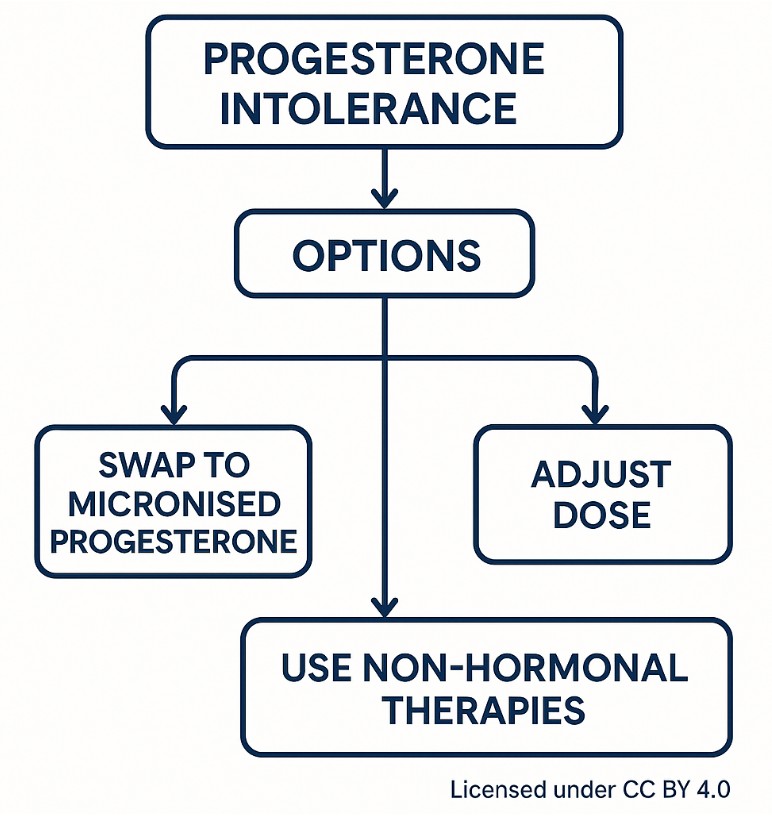
7.1 Switch from a synthetic progestogen to micronised (body-identical) progesterone
For many women, this is the single most effective adjustment.
What it is:
Oral micronised progesterone derived from yam/soya but chemically identical to human progesterone.
Why it can help:
- Fewer off-target receptor effects than synthetic progestogens
- More favourable impact on lipids and possibly breast risk in some data (evidence still evolving) (British Menopause Society)
- Sedating effect may improve sleep when taken at bedtime
A recent trial from Professor Jerilynn Prior’s group showed that oral micronised progesterone 300 mg at bedtime reduced perimenopausal night sweats and hot flushes compared with placebo, with good tolerability. (PubMed)
Regimens:
- Sequential: 200 mg at night for 12–14 days per 28-day cycle
- Continuous: 100 mg nightly with daily 0estrogen (often best reserved for post-menopause, not very early perimenopause) (British Menopause Society)
Some women with intolerance still feel better on sequential micronised progesterone (a “progesterone holiday” for half the month) than on continuous progestogen.
7.2 Change the route: Mirena® (LNG-IUS) or other intrauterine systems
The levonorgestrel-releasing intrauterine system (LNG-IUS) – often known by the brand name Mirena – is widely used for endometrial protection in women on estrogen therapy.
How it helps:
- Delivers most of the hormone directly to the uterus, with much lower blood levels than oral progestogen
- Often reduces or stops bleeding
- Provides contraception if you are still perimenopausal
BMS and multiple guidelines recognise Mirena as a highly effective way to provide endometrial protection for up to 5 years in HRT users. (British Menopause Society)
For some women with progesterone intolerance to oral preparations, switching to a Mirena coil and maintaining transdermal estrogen (patch/gel) is transformative.
7.3 Adjust the dose, timing or pattern of progesterone
For sensitive women, “how” you take progesterone can be as important as “which” one you use.
Possible strategies (all off-label and must be supervised):
- Sequential rather than continuous micronised progesterone (e.g. 200 mg for 12 days/month), allowing progesterone-free days to recover. (British Menopause Society)
- Bedtime dosing to “sleep through” the peak sedative or mood effects. (imsociety.org)
- Lower-dose sequential regimes with close endometrial monitoring if standard doses are not tolerated (e.g. ultrasound, biopsies where indicated). (British Menopause Society)
- Vaginal micronised progesterone (capsules used vaginally), which may give good local endometrial protection with lower systemic levels. Evidence is emerging and largely off-label; it may be considered only with specialist input. (British Menopause Society)
7.4 Consider alternative progestogens or tibolone
Some women tolerate certain synthetic progestogens better than others.
Options a specialist may consider:
- Dydrogesterone – a “retro-progesterone” that behaves more like natural progesterone and may have a more favourable side-effect profile for some women, though data are mixed and availability varies by country. (British Menopause Society)
- Drospirenone-containing MHT – has anti-mineralocorticoid properties (can reduce fluid retention) and may suit women troubled by bloating, but mood responses vary individually.
- Tibolone – a synthetic steroid with estrogenic, progestogenic and androgenic metabolites used as an alternative to conventional HRT in some postmenopausal women. It can be useful when standard progesterone causes unacceptable side-effects, though it is not suitable for everyone (for example, it is contraindicated after breast cancer). (British Menopause Society)
7.5 Surgical or interventional options (specialist only)
For a small subset of women with severe, proven progesterone intolerance who cannot tolerate any adequate form of progestogen, but for whom oestrogen therapy is still strongly indicated, specialist centres may consider:
- Endometrial ablation – destroys the uterine lining. It does not fully remove endometrial cancer risk, so most guidelines still recommend some form of progestogen afterwards, or close monitoring. (British Menopause Society)
- Hysterectomy – removal of the uterus; sometimes accompanied by removal of the ovaries, though this has its own long-term implications for cardiovascular and bone health. After hysterectomy, women can safely use oestrogen-only MHT, avoiding the need for progesterone.
These options are major life decisions and should only be considered after comprehensive counselling about risks, benefits and alternatives.
7.6 If MHT isn’t possible: evidence-based non-hormonal alternatives
Some women remain unable or unwilling to use any form of progestogen, or have other contraindications to MHT (for example, certain breast cancers).
In these cases, we focus on non-hormonal management of vasomotor and mood symptoms, including:
- a) Neurokinin-3 receptor antagonists (e.g. fezolinetant)
Fezolinetant is a non-hormonal tablet that targets the thermoregulatory centre in the brain. Phase 2 and later trials showed rapid and significant reductions in hot flush frequency and severity compared with placebo, and good tolerability over 6 months, particularly in women unsuitable for hormone therapy. (PubMed)
This represents an important option for women who cannot take estrogen or progestogens.
- b) Other non-hormonal medications
Guidelines such as the North American Menopause Society (NAMS) position statement recommend several non-hormonal options for vasomotor symptoms: (PubMed)
- SSRIs/SNRIs (e.g. escitalopram, venlafaxine)
- Gabapentin or pregabalin (useful especially where sleep disturbance or neuropathic pain co-exists)
- Clonidine (less commonly used now because of side-effects)
Where mood instability is marked, collaboration with a psychiatrist with PMDD/perimenopause expertise may be helpful.
- c) Cognitive behavioural therapy (CBT) and lifestyle
CBT adapted for menopause has been shown to improve coping with hot flushes and night sweats, and to reduce anxiety. (PubMed)
Lifestyle foundations still matter:
- Regular movement and resistance training
- Alcohol and caffeine moderation
- Nicotine cessation
- Sleep hygiene and stress-management techniques (mindfulness, yoga, breathing work)
-
More on progesterone intolerance, from our specialists
One email a month: new articles written by the clinicians you’d see. No spam, unsubscribe anytime.
Clinical guidance and expert voices
To ensure your plan is grounded in robust evidence, your clinician may refer to:
- BMS & Women’s Health Concern HRT recommendations (updated 2025) – highlight progestogen intolerance as a major reason for stopping HRT and discuss options such as LNG-IUS, micronised progesterone and tibolone. (British Menopause Society)
- North American Menopause Society 2022 Hormone Therapy Position Statement, led by Dr Stephanie Faubion – emphasises that hormone therapy remains the most effective treatment for vasomotor symptoms and genitourinary syndrome, and that risks vary with route, dose, age and type of progestogen used. (PubMed)
- Nick Panay’s work on progestogen intolerance – describing its impact on compliance and outlining strategies such as LNG-IUS, micronised progesterone and tailored regimens. (PubMed)
- Jerilynn Prior’s progesterone research – including RCTs showing that micronised progesterone can relieve vasomotor symptoms and improve sleep for perimenopausal women. (PubMed)
-
How to talk to your clinician about progesterone intolerance
When you book your review, take:
- Your symptom diary showing how you feel on and off progesterone
- A list of previous contraceptives or MHT products and how you reacted
- Any family or personal history of mood disorders or hormone-related issues
Questions you might ask:
- “Could I switch from this synthetic progestogen to micronised progesterone?”
- “Would a Mirena coil be appropriate for me for endometrial protection?”
- “Could we try a sequential regime or a different dosing pattern?”
- “If I can’t tolerate progesterone at all, what non-hormonal options (for example, fezolinetant or SSRIs) would be suitable?”
-
Key take-home messages
- Feeling awful on the progesterone part of MHT is not a reason to give up on symptom relief – it is a signal to individualise your regimen.
- There are multiple evidence-based strategies: changing progestogen type, route, dose and pattern; using an LNG-IUS; or, where necessary, moving to non-hormonal treatments.
- Decisions about endometrial protection and possible surgical options must be made with a menopause-trained specialist, weighing risks and benefits carefully.
- With thoughtful, evidence-based care, most women with progesterone intolerance can find a regime that supports both symptom control and long-term health.
Further reading & signposting (for your resource page)
You can link directly (where licences allow) or summarise these key resources:
- Panay N. Progestogen intolerance and compliance with hormone replacement therapy. Climacteric. 1997. (PubMed)
- British Menopause Society. Progestogens and endometrial protection (Technical report, 2023). (British Menopause Society)
- BMS & Women’s Health Concern. Recommendations on HRT in menopausal women (updated 2025). (British Menopause Society)
- North American Menopause Society. 2022 Position Statement on Hormone Therapy. (PubMed)
- Prior JC et al. Oral micronized progesterone for perimenopausal night sweats and hot flushes. Sci Rep. 2023. (PubMed)
- Schaudig K et al. Efficacy and safety of fezolinetant for moderate-severe vasomotor symptoms. BMJ. 2024. (BMJ)
- Fraser GL et al. Fezolinetant for menopausal vasomotor symptoms. J Clin Endocrinol Metab. 2019. (PubMed)
- Chelsea & Westminster NHS. Primary care HRT guidance – progesterone or progestogen intolerance section. (chelwest.nhs.uk)
Disclaimer: This article is for general information on progesterone intolerance and menopause care. It does not replace personalised medical advice. Always discuss changes to your MHT or treatment plan with a qualified health professional familiar with your medical history.




